As the textile sector seeks more sustainable and locally sourced materials, long fibre hemp is gaining renewed interest in Europe. Thanks to its agronomic advantages and its potential for high-value textile applications, hemp could contribute to the development of a more circular and bio-based textile industry.
The Hemp4Circularity project, funded by the Interreg North-West Europe programme, explores how European-grown hemp can be integrated into the textile value chain — from cultivation and fibre processing to spinning, weaving and textile applications.
This article presents the main results and insights from the project.
A new opportunity for hemp textiles in North-West Europe
Despite its long history in Europe, hemp is still only marginally used in the textile industry today. One of the main challenges lies in the absence of a structured value chain capable of producing long textile fibres compatible with existing flax processing equipment.
The Hemp4Circularity project was launched in 2022 to address this challenge. It brought together partners from the entire flax textile value chain — from machinery development and cultivation to fibre processing and textile manufacturing — to explore how hemp could complement and build on this existing model.
By combining agronomic
trials, fibre processing experiments and textile manufacturing tests across
several European regions, the project aimed to better understand the conditions
required to develop a viable hemp textile value chain in Europe, in complementarity
with flax.
WHY HEMP TEXTILE NOW ?
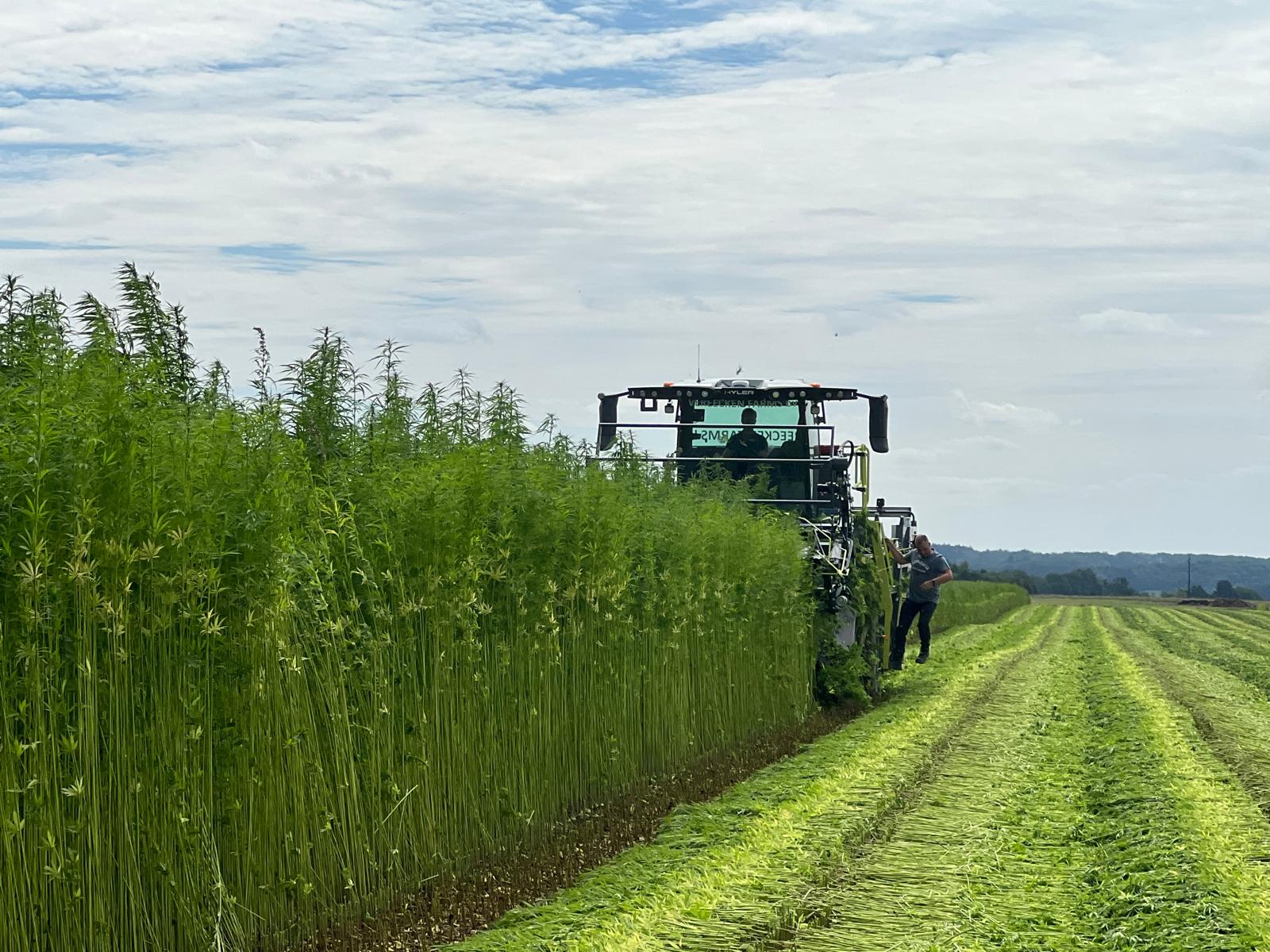
A key starting point was the development of the Sativa 200, an innovative harvesting machine capable of cutting long, parallel hemp stems — a major step towards the mechanisation of long-fibre hemp production. During the project, Hyler’s harvesting and turning machines were further upgraded, both mechanically and in terms of software. These improvements enhanced harvesting quality, operational speed, fibre quality and straw processability.
In parallel, a digital
platform was used to collect and centralise data from field operations and
fibre processing, improving transparency and traceability of hemp fibres — a
key parameter for structuring the value chain.


Growing textile hemp: a refined cultural approach
To understand the impact of cultivation practices on fibre quality and yield, agronomic data were collected between 2022 and 2025. More than 200 plots were monitored in France, Belgium, Germany and the Netherlands. The trials revealed differences between two hemp cultivars, USO31 and SAN27, in terms of short fibre production, highlighting that variety selection can influence fibre characteristics. While both varieties had the same average long fibre content, USO31 appeared to have a higher average short fibre content, and such, a higher total fibre content.
Based on field observations, the agronomists also identified several practical recommendations for growers. First, it is important to avoid soil compaction, as it negatively affects plant growth and yield.Second, hemp straw needs to be baled in dry conditions, as moisture content above 15% reduces processability. Third, the best harvesting period is between end of July and Mid-August, whatever the variety is early flowering or late flowering.
The total yield of straw and fibres showed a wide range of results going from 2 tons to 9,2 tons of retted straw per hectare, 0.3 tons to 1.8 tons of long fibre per hectare and 0.4 tons to 2.5 tons of short fibre per hectare.
This huge variability in results combined with a certain variability of sales prices of the fibre, leads to a net profit per hectare that can be very different from one field to another. The calculated average net profit, with the data gathered during the project, is of 1677 euros per hectare.
Overall, Hemp4Circularity showed thathemp for long fibre production, like flax, can be successfully grown and harvested in the project region and represents a relevant option for supporting natural fibre production.
First processing step: scutching long fibre hemp
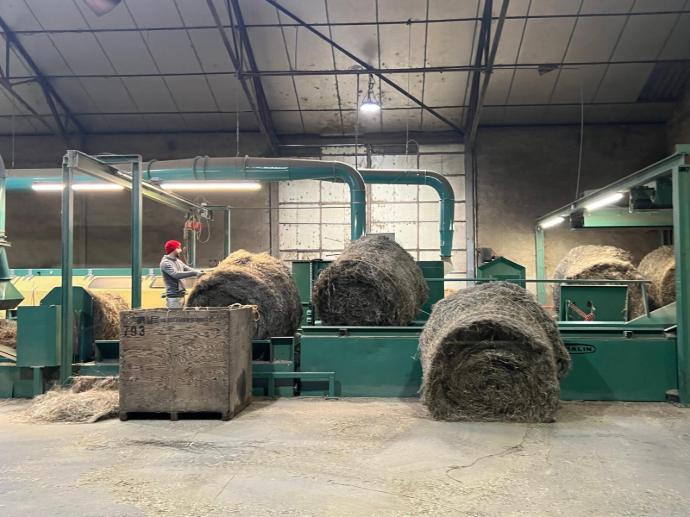
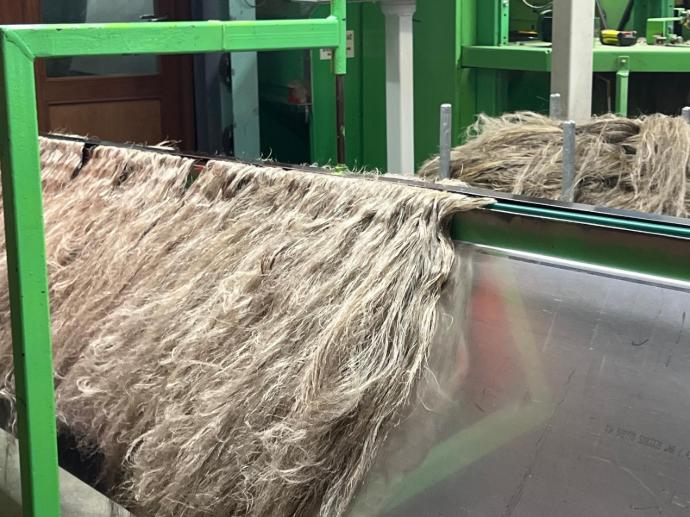
Hemp processing is carried out on existing flax scutching lines widely present in France, Belgium and the Netherlands. Scutching is a mechanical process that separates long and short fibres from by-products (dust, shives). While hemp and flax share similar processing methods, results remain highly variable, as both are natural materials influenced by weather conditions.
Processing speed has a direct impact on overall costs. For hemp, the current average processing speed is still approximately 30% lower than that of flax. In addition, the lower and upper parts of the hemp stems are processed separately, as they differ in both yield and processing speed.
The experience gained
during the project demonstrates that hemp can effectively be processed,
resulting in long fibres suitable for textile applications. Processing speed is
expected to increase in the coming years, as harvesting techniques continue to
improve, scutching settings are further optimised for hemp, and operators gain
more experience in handling hemp straw.
Hackling and spinning: from fibre to yarn
Within the Hemp4Circularity project, the French spinner Safilin conducted industrial trials to evaluate long hemp fibres during early textile processing, from fibre preparation to yarn production.
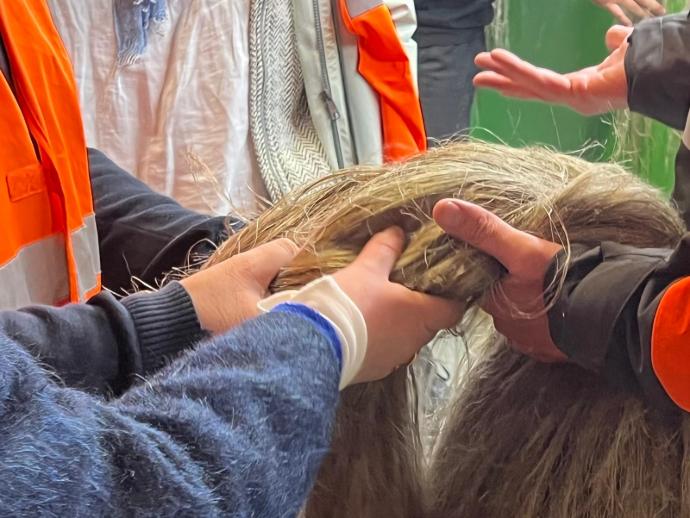
A specific classification framework was developed for hemp fibres, based on four key criteria: straw cleanliness, fibre cohesion, colour and length. An optimal fibre length for spinning was identified as being between 80 and 120 cm. Hackling, which transforms fibres into a continuous ribbon, proved to be the most challenging stage. Due to hemp’s stiffness and length, tangling occurs, requiring slower machine speeds and reducing productivity compared with flax.
Trials also revealed significant variability in fibre quality, depending on harvest conditions. Limited fibre batch availability reduced blending possibilities, sometimes affecting productivity and increasing breakages during roving production. Wet spinning also required specific pre-treatments and machine adjustments, as machine configuration strongly influenced yarn quality.
Overall, the results demonstrate that spinning long hemp fibres on adapted flax equipment is technically feasible. However, hackling and spinning efficiencies remain respectively around 50% and 35% lower for hemp than for flax, underlining the importance of continued machine optimisation to close this gap.
Weaving, pretreatment, dyeing and finishing: from yarn to fabric
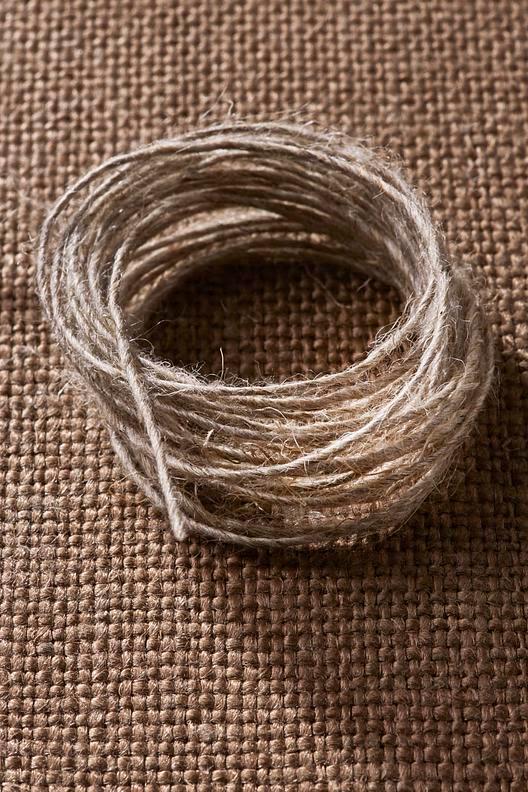
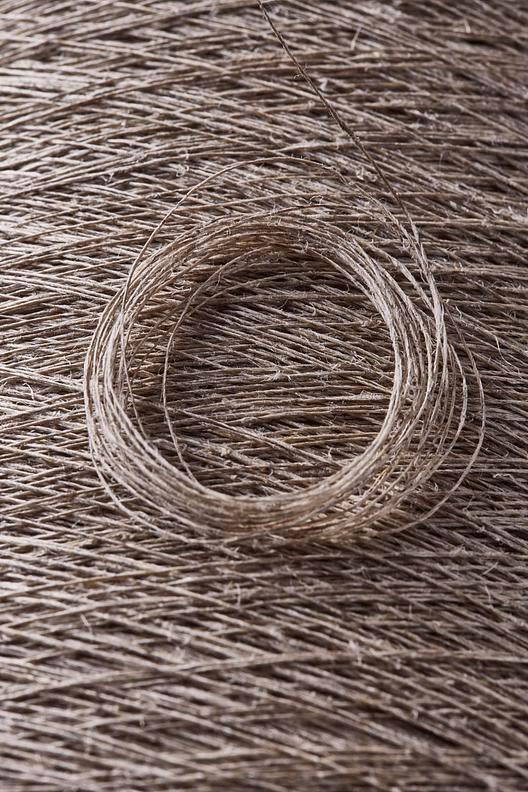
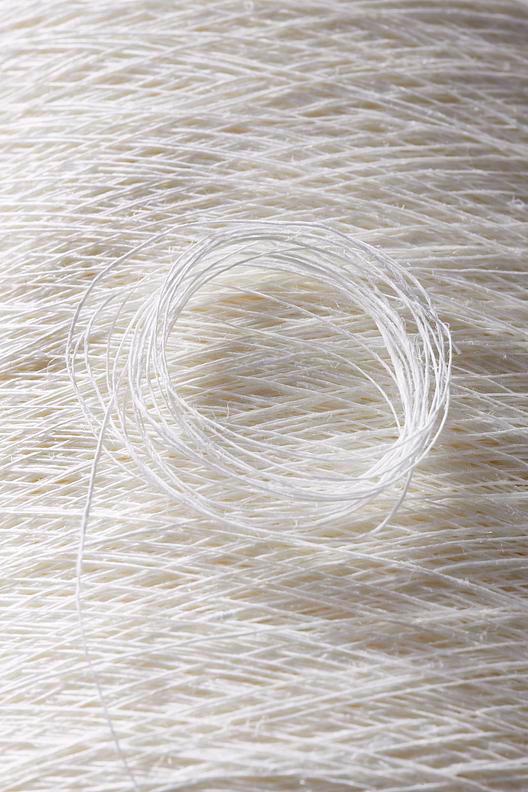
Both the preparation and weaving trials were carried out at Libeco, a Flemish flax weaving mill and at the FTI Lab of HOGENT, a textile research and innovation laboratory specialised in advanced fibre and yarn processing. Sectional warping was used prior to weaving, and yarns made from long hemp fibres — both wet- and dry-spun, with different yarn counts and finishes (boiled, bleached or ecru) — were tested in warp and weft across various weave structures on rapier looms. Wax was applied during warping to improve yarn performance during weaving.
The trials confirm that hemp yarns can be processed on conventional weaving equipment, provided that process parameters are adapted.
After weaving, standard pre-treatment steps — including singeing, demineralisation and desizing — followed by boiling-off and, where required, bleaching, made it possible to obtain clean and hydrophilic fabrics suitable for dyeing and finishing.
Cold pad-batch dyeing with reactive dyes was successfully applied, enabling uniform dyeing and a wide range of shades, with washing steps ensuring good colour fastness.
Due to the natural stiffness of hemp fibres, softeners were applied to improve fabric softness and abrasion resistance. Additional functional finishes — such as fire-retardant, anti-bacterial, and water- and oil-repellent treatments — were also tested.
Overall, the results show that dyeing and finishing processes used for other cellulosic fibres (such as cotton and flax) can be applied to hemp, although process parameters require adjustment. Hemp fabrics can therefore be used in a wide range of applications, including fashion, interior textiles and technical uses. Further research remains necessary to develop more sustainable dyeing and finishing processes.
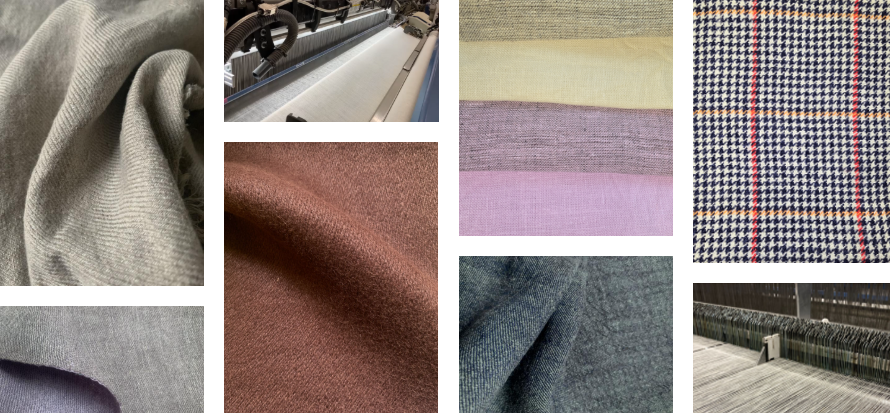
Building on hemp’s character: exploring territories of expression
Within the Hemp4Circularity project, “territories of expression” were developed to explore hemp as a true material language — shaped from field to fabric. In complement to linen, hemp reveals its own distinctive identity as a “fibre of character”, marked by strength, authenticity and the ability to carry the traces of time through its texture and natural irregularities.
This identity is expressed through a range of textile directions:
- Workwear: robust twills and herringbones inspired by utilitarian garments
- Tailoring meets casual: relaxed elegance in structured yet comfortable fabrics
- Denim: raw, authentic textures with indigo-inspired aesthetics
- Cosy comfort: softer, textured weaves with a casual, lived-in feel
These expressions also highlight the human dimension behind the material — the gestures, tools and know-how that shape it at every stage.
By linking cultivation, transformation and design, this approach demonstrates how hemp can support diverse aesthetics and applications, while contributing to a local, circular and high-quality textile value chain.
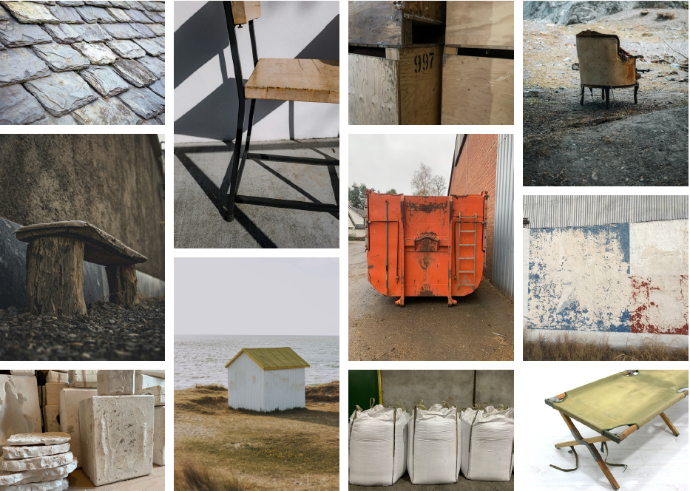
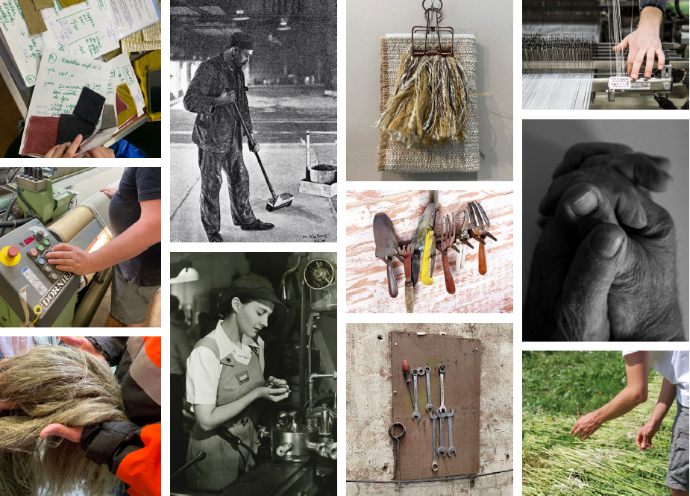
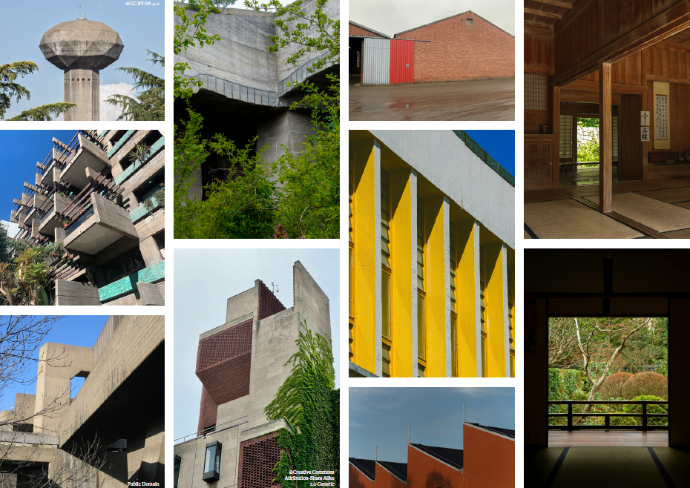
Images from The European Hemp Textile Inspiration Book, created as part of the project
Creating value through environmental footprint data
To respond to growing market expectations for lower-impact fibres and robust environmental data, the project initiated the first steps towards assessing the environmental footprint of European long fibre hemp, in line with the European Commission’s Product Environmental Footprint (PEF) methodology.
Data on cultivation and scutching were collected across several years and countries — including France, Belgium, the Netherlands and Germany — using a harmonised methodology to ensure consistency. These datasets were then consolidated at European level.
This work provides a first structured basis for understanding the environmental performance of hemp fibres. It will be further developed to improve representativeness, particularly by accounting for year-to-year variability, and to enable integration into European Commission databases, as well as other reference tools used for Life Cycle Assessment (LCA).
Markets and perspectives
The project results confirm that a full hemp textile value chain is technically feasible. However, targeted optimisations are still required to reach a reliable industrial scale.
Key priorities for scaling up include:
- Improving processing efficiency, particularly by increasing scutching speeds to enhance cost competitiveness
- Optimising fibre preparation, which directly impacts both processability and final quality
- Reducing variability, by ensuring more consistent fibre quality between batches
- Increasing productivity in scutching, spinning and weaving through adapted machine settings and process optimisation
Another critical factor is the availability of sufficient volumes of homogeneous raw material. A stable and predictable supply of high-quality fibres will be essential to enable industrial development. This requires further professionalisation of cultivation practices, harvesting techniques and primary processing.
In this context, the proximity of existing flax infrastructure in North-West Europe represents a major competitive advantage, offering opportunities to scale up while limiting investment needs.
In the medium term, the strongest market potential lies in higher value-added applications, such as interior textiles, technical uses and premium fashion. These segments allow hemp’s intrinsic properties — strength, durability and natural aesthetics — to be fully valorised. In this initial phase, Libeco is therefore likely to focus on coarser products, in line with current fibre characteristics.
These developments are aligned with the growing European policy focus on circular and bio-based materials, where local production and transparent value chains are becoming increasingly important. Further research on varieties will support improvements in fibre quality and processability, while continued technological progress is expected to enable finer applications in the longer term.
From potential to reality
Hemp4Circularity shows that a European long fibre hemp textile value chain is no longer a distant ambition, but a tangible and evolving reality. By bringing together actors across the entire chain, the project has demonstrated both the technical feasibility and the relevance of hemp as a local, bio-based fibre for the textile industry.
The results highlight hemp’s unique character — shaped by territories, climates and know-how — and its potential to support more circular and diversified textile applications. At the same time, key challenges remain, from improving fibre consistency and processing efficiency to strengthening environmental data at European level.
The foundations are now in place. Building on this collective momentum will be essential to scale up production and fully unlock hemp’s potential within a more sustainable European textile ecosystem.
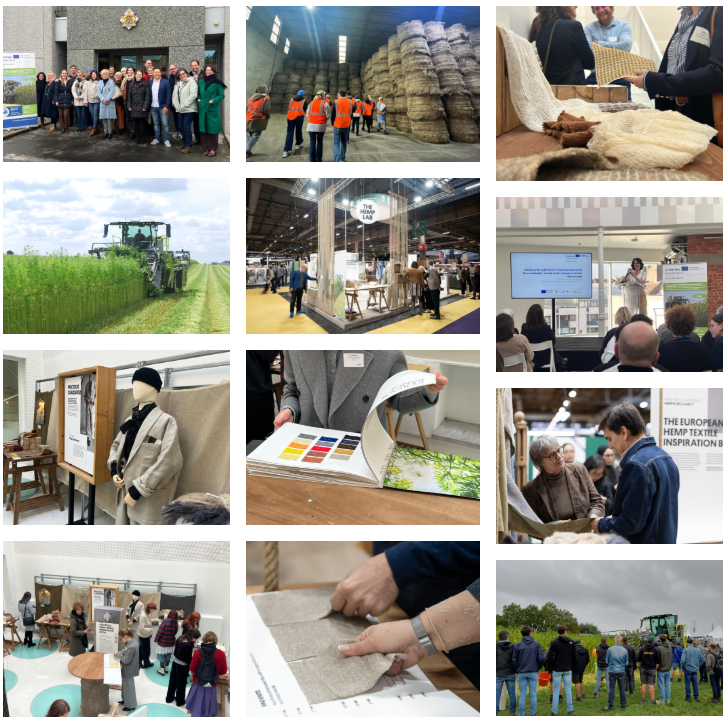
Hemp4Circularity — collaboration in action, from region to region, from field to market